


The war of the clocks, Act
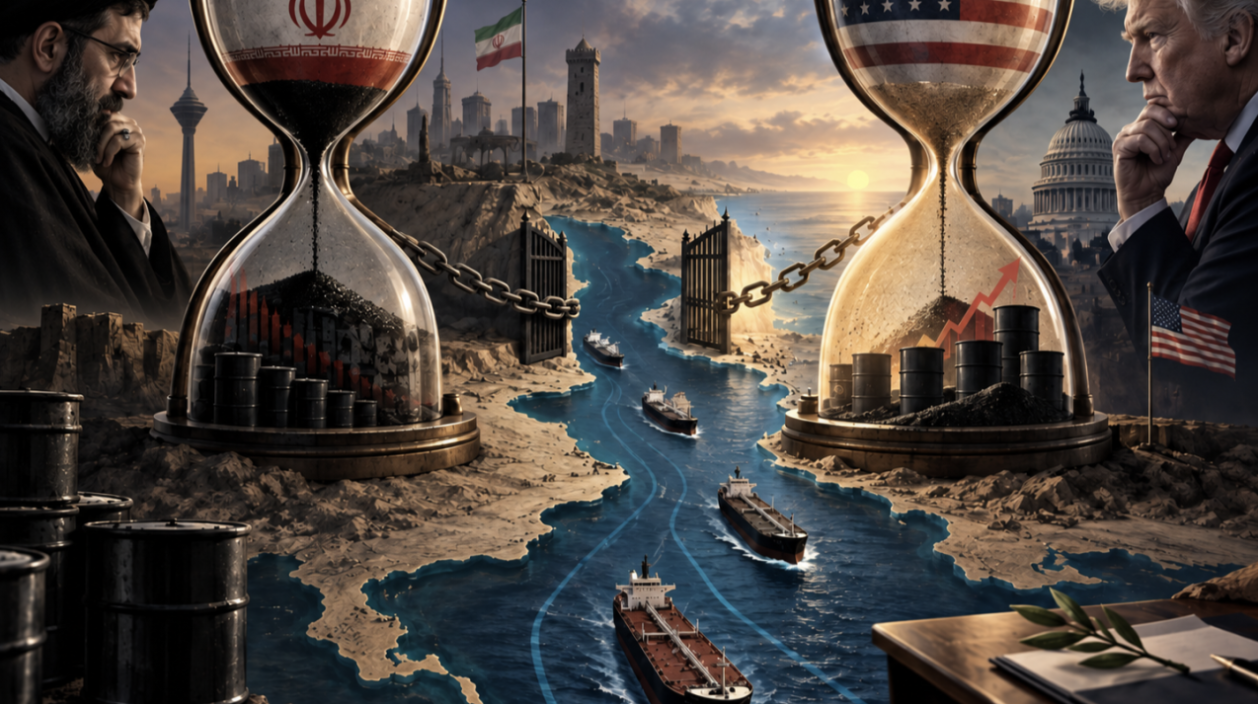
For several months, the conflict between Iran and the United States can be understood as a “war of the clocks.” The main question is not only which side has greater military power. It is also about which side can bear the economic, political and strategic cost of time for longer. But Iran’s latest demands may show that this conflict is now entering a new phase.
On September 22, a senior Iranian official said that Iran was ready to reopen the Strait of Hormuz within a week if the United States reduced its military pressure and lifted the blockade on Iranian ports. The proposal was reportedly passed to Washington through intermediaries a few days earlier, while the Iranian delegation in New York had been given a mandate to look for a diplomatic way out.This is an important development. For much of the crisis, Hormuz was mainly presented as a weapon of pressure. Iran’s message was simple: if Washington increases the pressure on Tehran, Iran can increase the economic cost for the rest of the world.
Today the logic seems to be changing.
Iran is no longer only threatening to close the Strait or keep it closed. It is now offering to reopen it in exchange for American concessions. Hormuz is therefore becoming not only a weapon, but also a bargaining tool.
The first clock is Iran’s clock.
It measures the cost of the blockade, sanctions, trade difficulties and the loss of foreign currency revenues. The longer this pressure continues, the more Tehran must decide whether to keep using its main instrument of pressure or try to turn it into a diplomatic gain.
A strategic weapon has value only as long as the other side truly fears it. If the rest of the world slowly learns how to work around it, that value begins to fall. This is what may now be happening around Hormuz.
Gulf producers have developed alternative ways to move their oil. Ship-to-ship oil transfers near Oman have rapidly increased. These solutions are expensive and imperfect, but they show that the area and energy markets are slowly learning to adapt. The closure or disruption of Hormuz continues to create a real economic cost.
There is an important difference between creating a shock and keeping that shock powerful over time. After several weeks or months, shipping companies, producers and governments begin looking for other routes, other methods and other sources of energy. Costs remain high, but the element of surprise slowly disappears. This is where Iran’s clock may now be starting to run faster.
If Tehran waits too long, ”the weapon” whose bargaining value is slowly falling. It therefore has an interest in turning its power to disrupt into diplomatic capital before different ways of avoiding Hormuz become more effective. This may be the deeper meaning of Iran’s latest proposal: obtain concessions today in exchange for reopening the Strait. But it would be too simple to conclude that Washington has already won this war of time.
The United States also has its own clock.
Economic and political factors are linked to energy prices. A strategy that pressures Iran can also raise costs for the American economy. Time is becoming an enemy for both sides. Washington wants economic pressure to force Tehran to make concessions. Tehran wants energy costs, military pressure and political costs to push Washington toward a compromise.
The difference today is that the clearest signs of a search for an exit seem to be coming more from Tehran.
Iran’s offer to reopen Hormuz under certain conditions shows that it is now trying to turn its strongest regional bargaining card into a negotiating tool. This does not necessarily mean surrender. It usually tries to exchange it while that card still has value. This is why the war of the clocks may now be entering a second phase.
The first question was:Who can live with the closure of Hormuz for longer? The new question is: Can Tehran secure enough concessions before time reduces the Strait’s strategic value?
For Washington, the objective is the opposite. The United States wants to keep the pressure on Iran long enough to increase Tehran’s economic difficulties, but without allowing global energy costs to become too painful
For Tehran, the challenge is to negotiate before alternative routes and adapting energy markets reduce its ability to create pressure.
The war of the clocks is therefore not over.But its rhythm may be changing.Time is still an Iranian weapon because Hormuz continues to influence global energy markets. But time is also becoming a problem for Tehran. Every additional week can increase the pressure on the Iranian economy while giving the rest of the world more time to adapt.
This may be the main paradox of this new phase.Iran still has the power to disrupt the Strait of Hormuz. But it must now ask itself how long that power will keep the same political and economic value.
A war of the clocks: the question is not simply who can wait longer. It is when time” stops being a weapon and starts becoming a burden.”


